
By Ibrahim Muhammad
The United Nations Children’s Fund (UNICEF) has raised concern that low access to Early Childhood Education (ECE) is worsening the out-of-school children crisis in Northwest Nigeria, particularly in Jigawa, Kano, and Katsina states.
Speaking at a media dialogue in Dutse, Officer-in-Charge of UNICEF Field Office Kano,Dr. Karanveer Singh , revealed that only 24 per cent of children in Jigawa have access to ECE, compared to 29 per cent in Kano and 32 per cent in Katsina.
He warned that the majority of children in the region are missing out on the critical early learning phase, which plays a vital role in shaping cognitive, social, and emotional development.
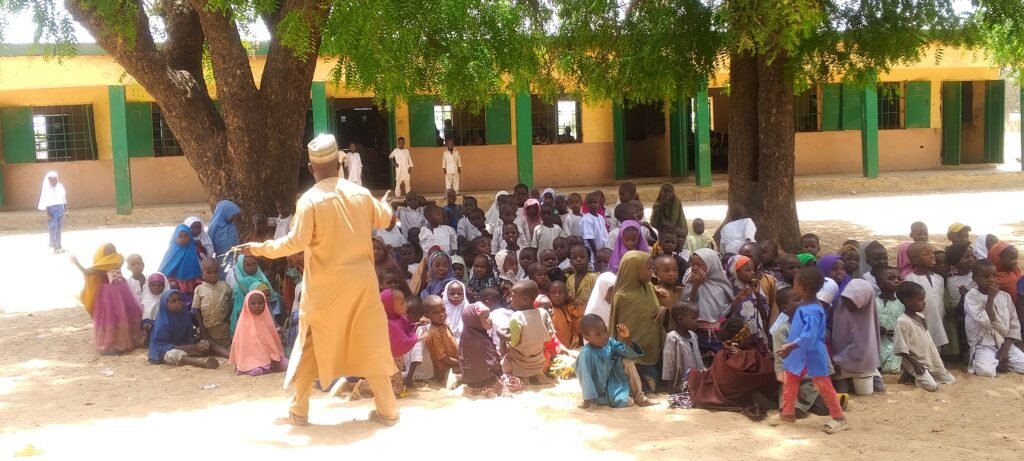
According to him, children who are denied early education are more likely to begin primary school at a disadvantage, struggle to keep up academically, and eventually drop out.
“This contributes significantly to the growing number of out-of-school children in the region,” he said, noting that foundational literacy levels in some areas remain below 15 per cent.
Also speaking, UNICEF Education Specialist, Mustapha Shehu, cited Multiple Indicator Cluster Survey (MICS 2022) data showing that only 37.8 per cent of Nigerian children aged three to four have access to early childhood education.
He added that stark inequalities persist, with 75 per cent of children from the richest households attending ECE, compared to just 11 per cent from the poorest families.
An education consultant,Dr. Sunday Jacob, said Nigeria’s out-of-school population stands at about 18.3 million, with Jigawa, Kano, and Katsina accounting for nearly 30 per cent of the total.
He emphasised that investing in early childhood education is critical to reversing the trend, as it supports up to 90 per cent of brain development.
He called on state governments to create dedicated budget lines for early childhood education to expand access and improve learning outcomes.
Responding, Commissioners of Basic Education from the three states pledged to increase funding and prioritise early childhood education through improved infrastructure, recruitment of qualified caregivers, and expansion of child-friendly learning centres.
Stakeholders at the dialogue agreed that without urgent and sustained investment in early childhood education, efforts to reduce the out-of-school children crisis in Northwest Nigeria may continue to face significant setbacks.