In the vast, sun-drenched landscapes of Jigawa State, a silent but seismic shift is occurring. While the national discourse often lingers on the anxieties of food inflation and economic volatility, the “Great Blue Hills” state is busy writing a different story—one of soil, sweat, and sophisticated strategy.
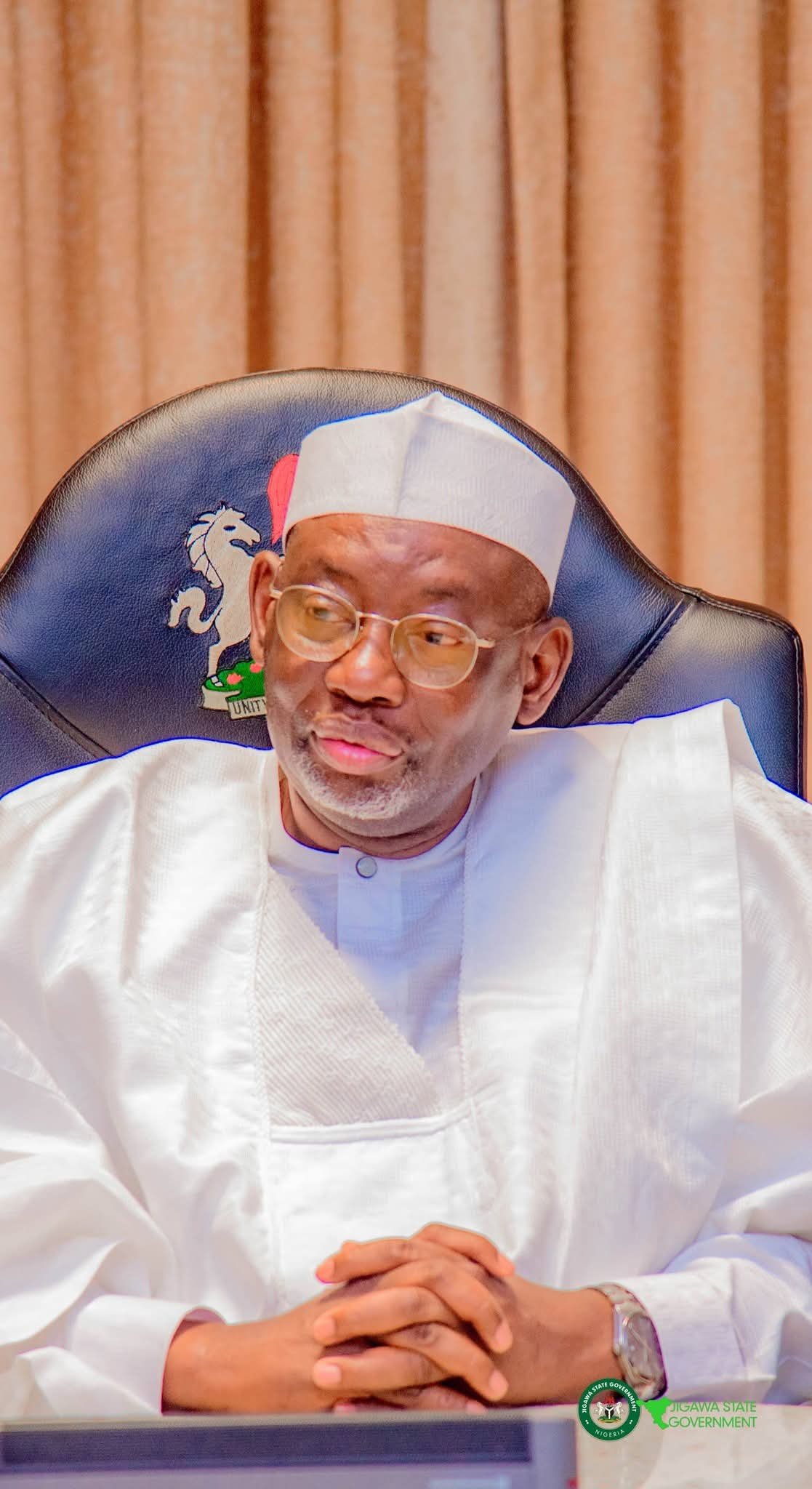
At the center of this transformation is His Excellency, Mallam Umar Namadi, FCA, a leader who has traded the typical political fanfare for a pair of boots on the ground and a vision that is turning the “Greater Jigawa” 12-point agenda into a continental blueprint for prosperity.
The Peacemaker: Healing the Hadejia Wetlands
Perhaps the Governor’s most profound achievement is one that cannot be measured in metric tonnes alone: the restoration of human harmony. For over a quarter-century, the Hadejia wetlands—a vital ecological lifeline—were defined by the tragic cycle of farmer-herder clashes.
Governor Namadi did not meet this crisis with mere rhetoric; he met it with maps and mediation. By meticulously demarcating 57 grazing reserves and gazetting cattle routes that had been encroached upon for decades, he provided a spatial solution to a social problem.
Today, through the establishment of community-based conflict resolution committees, Jigawa has achieved what many thought impossible—a sustained period of peace where the cattle and the crop coexist. He has proven that the first input in any successful farm is stability.
“Governor Namadi has achieved what many thought impossible—securing the stability necessary for a true agricultural revolution to take root.”
The Mechanization Miracle: From Hoes to Horsepower
For generations, the Nigerian farmer was shackled to the manual hoe—a tool of subsistence, not of wealth. Governor Namadi has broken those chains. Recognizing that a state cannot feed a nation with 19th-century tools, his administration has flooded the fields with over 300 tractors and thousands of power tillers.
This mechanization drive is not just about equipment; it is about dignity. By shifting the burden of labor from human muscle to modern machinery, the “Namadi Model” is making agriculture an attractive career for the youth, stemming the tide of rural-urban migration and turning smallholder plots into commercial enterprises.
Ending the Tyranny of the Seasons
To Governor Namadi, the idea that farming should depend solely on the whims of the clouds is an outdated concept. His “Quest for Irrigation” is perhaps his most ambitious legacy. By commissioning solar-powered drip irrigation schemes in communities like Lallashi, he has empowered farmers to cultivate three times a year instead of once.
The scale of this ambition is staggering. A landmark
Memorandum of Understanding (MoU) for a 100,000-hectare alfalfa project—projected to generate over $400 million annually—stands as a testament to his vision. His 2025 Dry Season Rice Programme, which targeted 50,000 hectares with over ₦8 billion in input subsidies, has effectively ensured that “farming season” in Jigawa is now 365 days long.
The Civil Servant as an Agropreneur
In a move that redefined the role of the public worker, the Governor pioneered the Civil Servants’ Agricultural Support Programme. Recognizing the untapped potential of the state’s workforce, the administration disbursed over ₦5.9 billion in interest-free loans to more than 17,000 workers.
By providing civil servants with the capital to engage in large-scale farming—ranging from ₦250,000 for millet to ₦500,000 for rice—Namadi is diversifying the income of his workforce while simultaneously boosting the state’s strategic food reserves. This is economic empowerment in its purest form: turning consumers into producers.
The Halal Drive: A Gateway to Global Markets
Governor Namadi’s vision doesn’t stop at the state borders; it looks toward the $3 trillion global Halal market. Through the Jigawa Halal Project, he is positioning the state as Nigeria’s certified gateway for agro-exports. By securing the approval for a pioneer Halal Lab in the state, the Governor is ensuring that Jigawa’s beef, leather, and crops meet the highest international standards.
This forward-thinking approach has already caught the eyes of the world. International investors, including major firms from Wuhan, China, have pledged over $20 million to advance local livestock and crop value chains. Under Namadi, Jigawa is no longer just a state in Nigeria; it is a brand in the global marketplace.
Data, Digitalization, and the IITA Partnership
What truly sets the Governor apart—and why he was honored as the 2025 Digital Governor of the Year—is his embrace of science. By partnering with the International Institute of Tropical Agriculture (IITA), he has brought world-class research to the local farmer’s doorstep. From soil mapping to high-yield seed varieties, every decision is data-driven. By dedicating nearly 30% of the state budget to education, he is training the next generation of agronomists, ensuring the revolution outlives his administration.
“Namadi stands out as the man who saw a goldmine in our soil and had the political will to dig”
The Verdict: The Champion of the North
As the 2026 “Budget of Innovation and Transformation” begins to bear fruit, the results are undeniable. The silos are filling, the markets are bustling, and the tension in the wetlands has been replaced by the hum of tractors.
Governor Umar Namadi is proving that agriculture is the most viable path to Nigerian prosperity. He has successfully co-opted every sector of society—from the civil servant to the nomadic herder—into a unified vision of progress. He is not just the Governor of Jigawa; he is the undisputed champion of the African agrarian revolution, a leader who has turned the “Great Blue Hills” into a green paradise
Buhari Muhammad
bkdjgs@gmail.com