By Ibrahim Ibrahim
When Umar Namadi became Governor of Jigawa State in 2023, the backbone of the state’s economy , agriculture was in distress. Despite fertile land and a hardworking rural population, farmers faced outdated irrigation systems, weak extension services, poor mechanisation, and recurring floods. Yields remained far below potential, and poverty persisted where prosperity should have flourished.
Two years later, that story is changing. Jigawa is undergoing an agricultural transformation a deliberate, system wide shift from subsistence farming to agribusiness unlocking wealth, jobs, and food security for millions.
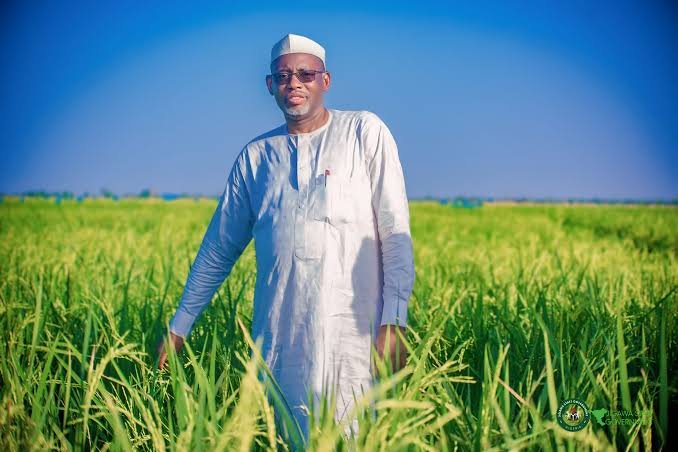
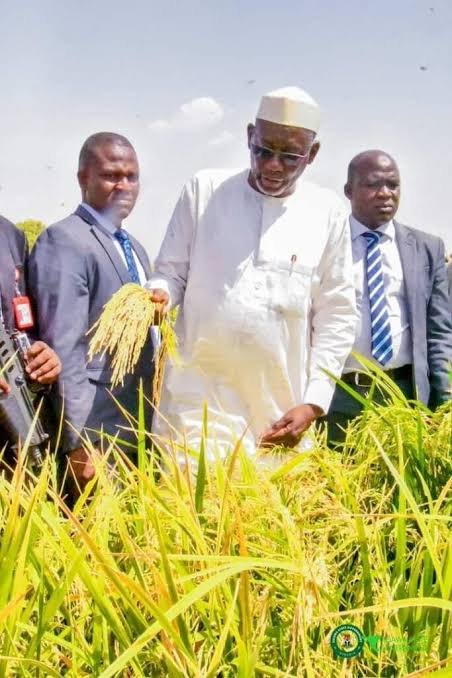
Jigawa is built for agriculture. Of its 2.4 million hectares of land, 1.9 million are arable, ranking among the most agriculturally promising landscapes in Nigeria. The state is already Nigeria’s second-largest rice producer and a major grower of wheat, sesame, and hibiscus. Staple crops like millet, sorghum, and legumes thrive here, feeding households while supplying industries and export markets.
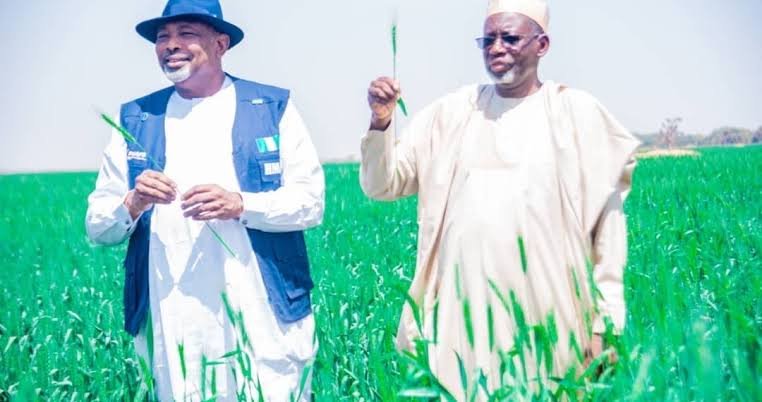
The livestock sector is equally robust. With roughly 3.6 million cattle, six million sheep and goats, and over 15 million poultry birds, Jigawa produces meat, milk, hides, eggs, and thousands of rural jobs. This is not just farming it is a living, breathing agricultural economy ready to scale.
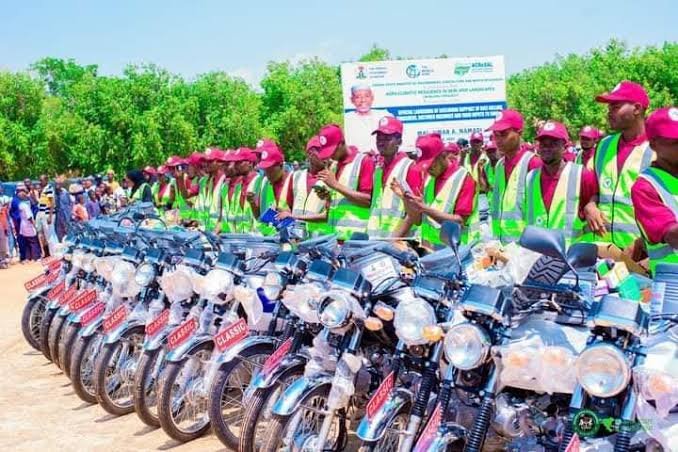
However, recognising the role of livestock in household income, nutrition, and rural stability, the Namadi administration has also taken deliberate steps to protect and expand animal resources. In a landmark initiative, the governor inaugurated and distributed working materials to 300 youths trained to provide mobile veterinary clinic services across all 287 political wards of the state.
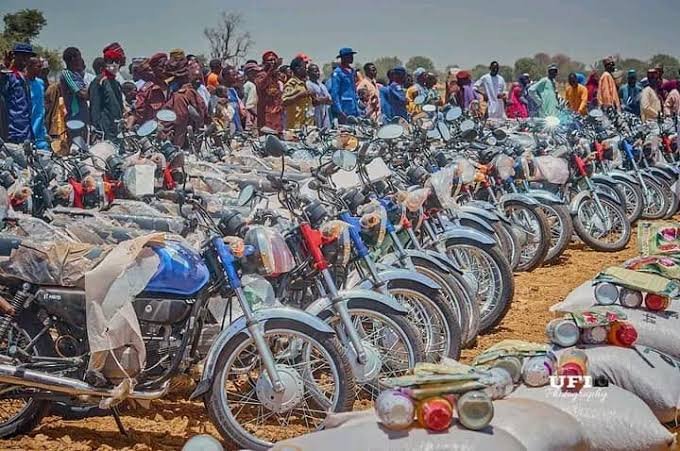
Each beneficiary received a motorcycle equipped with a medical toolbox, vaccination kits, a drug box, and other accessories for routine and emergency veterinary services strengthening animal health systems, controlling diseases, and safeguarding the state’s livestock population.
Thousands of women were also empowered with three goats each, giving them an entry point into income generation, household nutrition, and small-scale livestock entrepreneurship a vital move in lifting rural families out of poverty.
Consequently, one of Governor Namadi’s first priorities was irrigation. His administration commissioned experts to redesign and expand irrigation networks, rehabilitating and constructing 10 dams of various sizes. The River Mayo plains stretching more than 200 kilometres across Jigawa and into Kano representing a new frontier for dry-season farming.
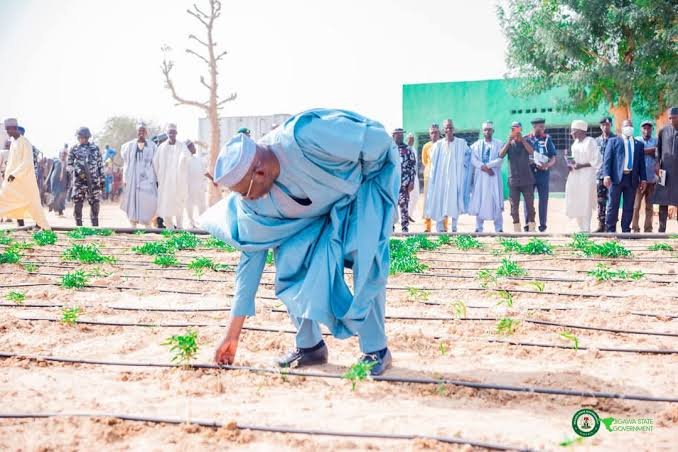
Also by freeing farmers from dependence on seasonal rainfall, Jigawa is building a year-round production system a cornerstone of food security in an era of climate uncertainty.
For years, seasonal floods destroyed entire harvests, plunging thousands of families into debt and despair. The Namadi administration tackled this head-on. A Flood Control Technical Committee now clears blocked waterways, dredges silted rivers, removes invasive typha grass, and enforces strict rules against illegal water channels. More than 70 kilometres of protective dykes have already been built.
Equally important, 23,000 rice farmers are now covered by a joint federal–state crop insurance scheme.
To make agriculture attractive to the next generation, Jigawa launched the Rice Millionaires Programme. Participants receive irrigated land, solar-powered water pumps, improved seeds, and all necessary inputs on loan. A single hectare can yield about 50 bags of rice worth roughly ₦2.5 million. After repaying the loan, a young farmer can clear around ₦1.7 million — in just four months.
What began with 16 pilot sites now spans all 27 local government areas. With federal support adding 10,000 more water pumps, rice farming is rapidly becoming a profitable, youth-led business revolution.
Before Namadi, Jigawa had fewer than 300 extension agents for over one million farmers roughly one agent for every 30,000 farmers. The result was predictable: weak adoption of improved practices and persistently low yields.
In addition, through the J-AGRO scheme, the state has recruited 1,435 fresh agriculture graduates, improving the ratio to about one agent per 600 farmers one of the best in Nigeria. Trained with international partners such as IFDC, Africa RISE, and POPCORN, these agents each equipped with a motorcycle are now stationed in every ward, bringing modern farming knowledge directly to rural communities.
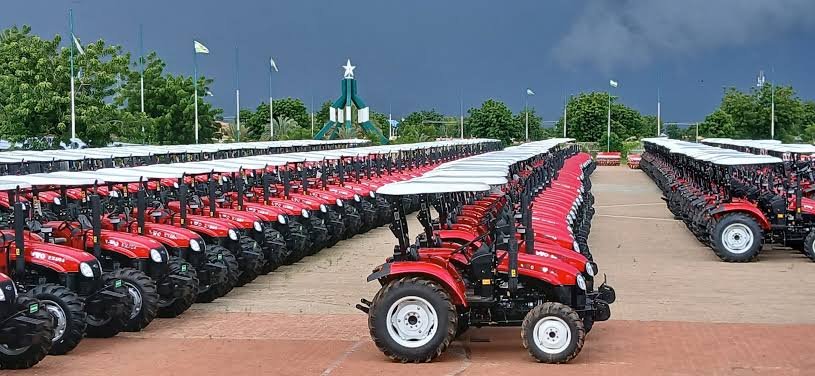
A review of Jigawa’s mechanisation assets revealed a grim reality: of over 1,000 tractors procured by previous administrations, fewer than 10 were operational. Many had been distributed as political favours, and a lack of trained technicians and spare parts rendered them useless.
Namadi’s team redesigned the system. Thirty master technicians were sent to China for intensive training in tractor assembly and repair. Each constituency now has a trained engineer, and spare parts for two years have been secured alongside new tractors. The goal is clear: no tractor should sit idle because of a simple breakdown.
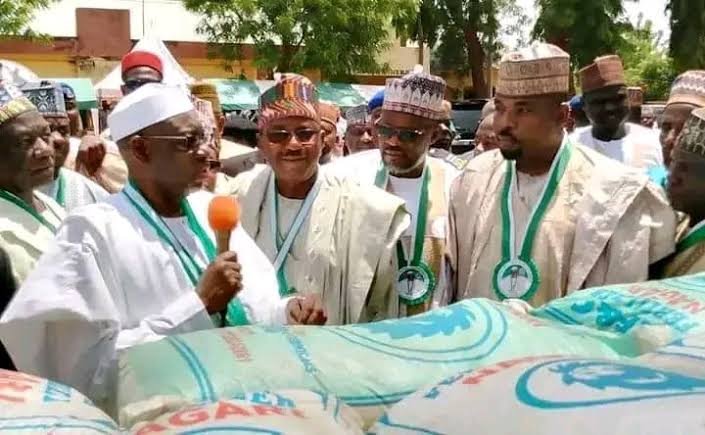
At the same time, the governor is ensuring that farmers have what they need to plant at scale. Recently, he distributed agricultural inputs — including fertilisers, herbicides, pesticides, and certified seeds for wheat, rice, and maize — to thousands of beneficiaries. Each farmer received two bags of NPK fertiliser, one bag of selective and non-selective herbicides, pesticides, and certified seeds, providing the foundation for higher yields and improved household incomes.
The governor is frank about the hurdles. Climate change threatens wheat yields, input delivery delays persist, fertiliser prices remain high, rural roads are in poor condition, and financing gaps still limit growth.
Solutions are already underway: 80 trucks of fertiliser have been procured with a 20% subsidy, a vandalised fertiliser blending plant is being revived, and private-sector investments including organic and chemical fertiliser production are being actively pursued.
Governor Namadi’s vision goes beyond farming. His strategy is to create value not just grow raw crops, but process them, package them, and sell them at higher margins.