By Ibrahim Muhammad
The Centre for Information Technology and Development (CITAD) has expressed concern over significant gaps in Nigeria’s digital policies, warning that inadequate attention to gender inclusion and climate action could undermine the country’s digital transformation agenda.
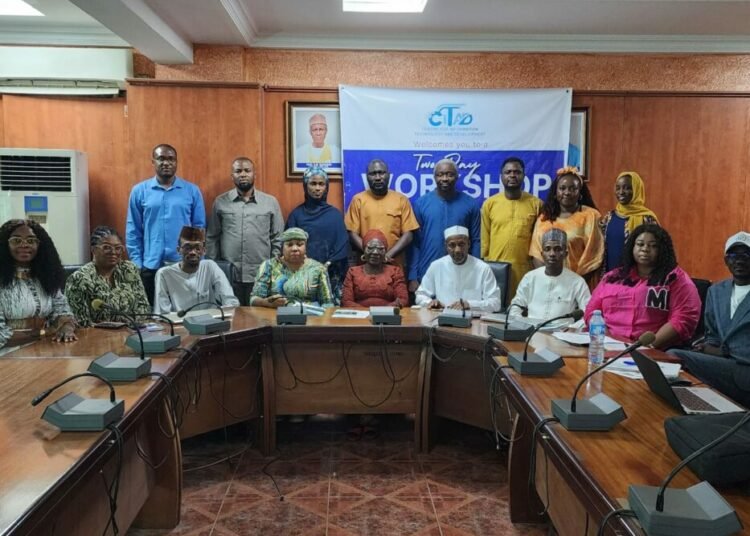
The concerns were raised during a two-day national workshop titled Engendering and Greening Digital Policies in Nigeria, organised by CITAD with support from the Association for Progressive Communications and held in Abuja.
Presenting findings from CITAD’s research, the project lead, Fatima Baba-Kura, said an assessment of four key national digital policies showed that gender and climate issues were largely treated as secondary considerations, with no clear mechanisms for measuring impact.
She explained that although some policies referenced gender and environmental concerns, they lacked defined Key Performance Indicators, while climate-related goals such as Sustainable Development Goal 13 were completely absent.
“Gender and climate considerations appear mostly at a rhetorical level. Without clear indicators and monitoring frameworks, it becomes difficult to assess progress or hold institutions accountable,” Baba-Kura said.
She cautioned that the absence of deliberate inclusion and sustainability measures could widen existing inequalities, stressing that digital development must be people-centred.
“Digital transformation goes beyond technology. If women, marginalised groups and environmental realities are ignored, digital systems may end up reinforcing inequality instead of reducing it,” she added.
Baba-Kura called on government agencies and policymakers to urgently review existing digital frameworks to mainstream gender equity and climate action, noting that both elements should be central to Nigeria’s digital future.
Also speaking at the event, the Director of Climate Change at the Kano State Ministry of Environment and Climate Change, Umar Saleh Anka, urged stronger alignment between Nigeria’s digital economy and climate commitments.
He said the Climate Change Act 2021 and Nigeria’s Nationally Determined Contributions, which aim for a 20 per cent unconditional and 46 per cent conditional reduction in greenhouse gas emissions, could be advanced through greener digital practices.
Anka highlighted measures such as energy-efficient websites, paperless operations, green procurement and renewable-powered data centres as practical steps organisations could adopt to cut emissions and create green jobs.
He further warned that climate change increasingly threatens digital infrastructure through flooding and heat stress, leading to higher operational costs and reduced efficiency, while noting that gender disparities in access to digital tools and internet services persist.
Participants at the workshop, drawn from government ministries, regulatory bodies and the private sector, reviewed key digital policies and identified weak implementation and monitoring mechanisms for gender and environmental impact.
They also observed that projects with women involved in their design tended to be more sustainable, citing rural initiatives where women prioritised water access and social infrastructure.
The workshop concluded with group sessions that produced practical recommendations for policy reform, as CITAD reaffirmed its commitment to continued engagement with policymakers.
Stakeholders agreed that as Nigeria intensifies its digital transformation efforts, gender equity and environmental sustainability must remain central to policy implementation.